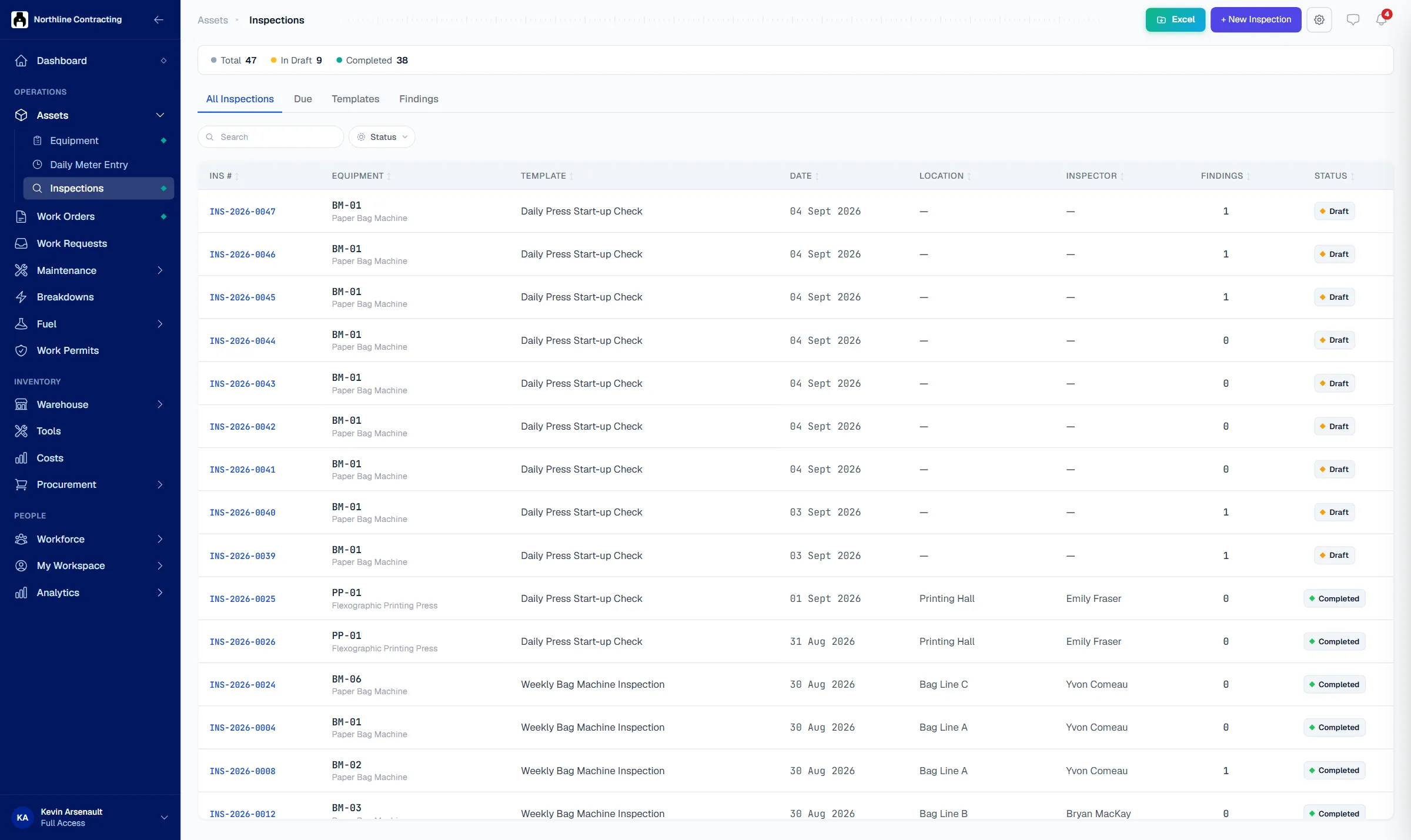
Daily walkarounds, weekly checks, statutory inspections — all on checklists, all on schedule. A failed item doesn't stay a tick in a box: it becomes a finding, and the finding becomes a work order.
Inspections
Most inspection regimes die in a filing cabinet. Here, every fail is born linked — to the machine, to a severity, to the work order that fixes it — and stays open until someone closes it for real.
Build the checklist once per equipment type — excavator daily, crane statutory, vehicle weekly — and every inspection runs the same items, in the same order, every time.
Daily, weekly, monthly, or hours-based — the due engine keeps a fleet-wide queue of what needs inspecting, so nothing statutory slips past its date.
Each fail gets a severity, photos, and an owner. Critical findings can raise a work order on the spot — and the finding won't close until its repair does.
It becomes a finding: a tracked item with its own category, photos and history, which can be turned into a work order. A failed checklist line is not a note that disappears when the sheet is filed; it is an open item until somebody closes it.
Yes, and recording it moves the machine. An inspector standing in front of a machine is the best evidence there is of where it is, so the zone chosen on the inspection becomes the machine's current location. The inspection keeps its own zone forever, so an inspection carried out in March still says March's zone after the machine moves in April.
No. A machine's first inspection cycle is measured from its arrival for calendar templates and from a zero meter for meter templates, so registering a fleet never manufactures a backlog on day one. Never inspected and overdue are different statements and Solmex keeps them apart.
Yes: a signed inspection report per inspection, and finding action cards that print one finding per A4 sheet for a workshop wall. Both carry the photographs taken on the round, rotated the right way up.
Run a walkaround on a phone, fail an item, and watch the finding turn into a scheduled repair — in a 30-minute walkthrough.
NO COMMITMENT · YOUR DATA STAYS YOURS