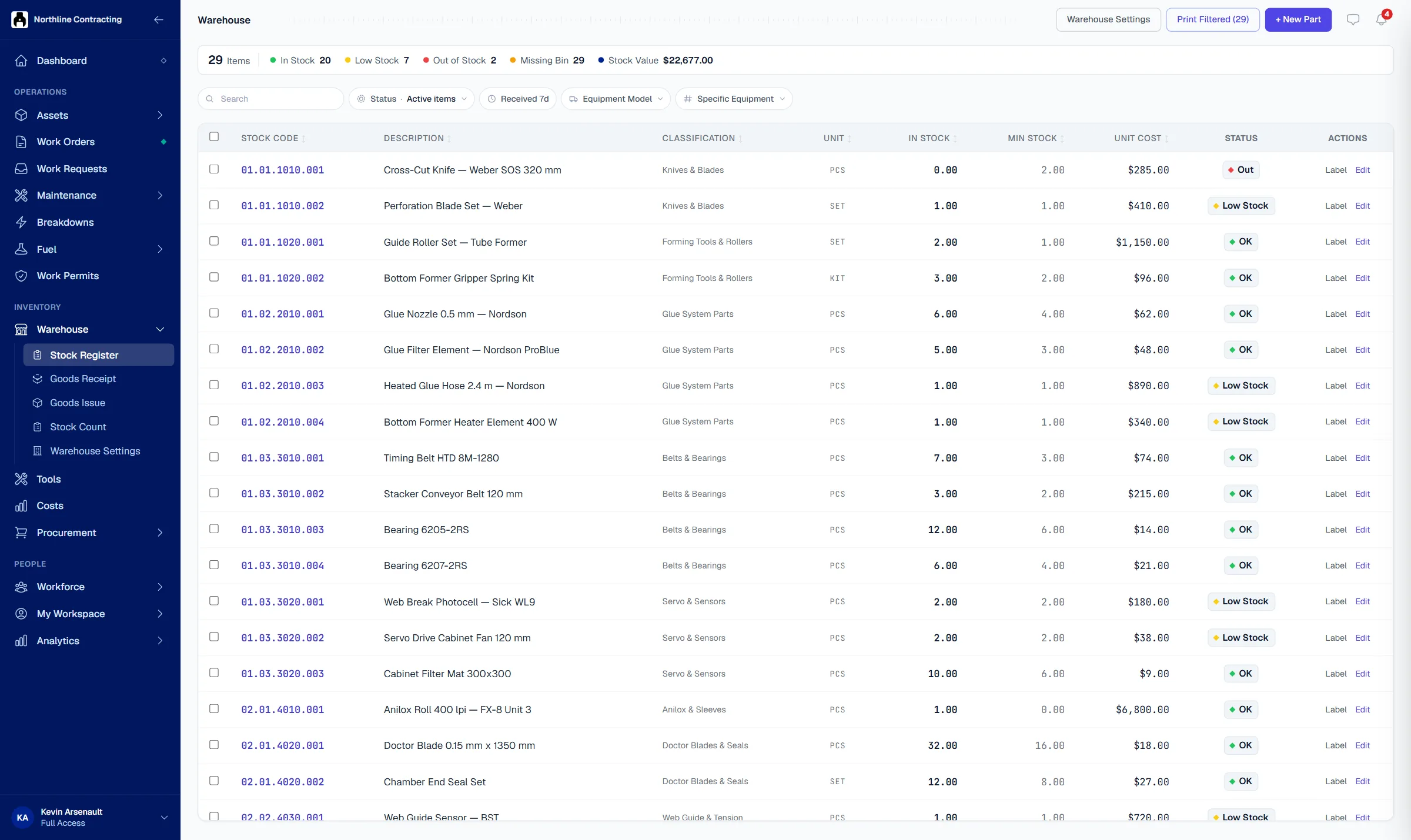
Every part number, every bin, every movement. Stock in Solmex is a ledger, not a count — receipts, issues, returns, and adjustments all leave a line, so today's quantity always has a paper trail.
Warehouse & spare parts
Issues go against a work order and a machine, so a part leaving the shelf lands on the repair that used it — and on that machine's cost record, automatically. Min levels flag reorders before the shelf goes empty.
Receipt, issue, return, adjustment — nothing else touches stock. Current quantity is the sum of the ledger, which means any number on any screen can be audited back to its lines.
Store → aisle → rack → bin, managed as a hierarchy. Print a QR label for any bin or part; scanning it in the field opens the live record — quantity, location, history.
Every priced issue posts straight into the cost ledger against its machine and work order. Nobody keys parts costs twice; nobody forgets to.
As a movement ledger, not a number somebody edits. Every receipt, issue, return, transfer and adjustment is a document with lines, and the quantity on hand is derived from those movements. Stock cannot go negative: an issue larger than the balance is refused rather than recorded.
Yes. A part issued against a machine or a work order is consumed from stock in first in, first out order and posted to the cost ledger at what that stock actually cost, in the same transaction. That is what makes cost per operating hour a real figure rather than an estimate.
You post the count and Solmex records the adjustment as its own movement with a reason, so the discrepancy is visible rather than smoothed away. A count line carries the figure the sheet was printed showing, and if stock moved between printing and posting the sheet is refused with both numbers named, instead of silently undoing that movement.
Yes. Storage locations are a managed hierarchy and both locations and parts print QR labels, so a storeman finds a part by scanning rather than by remembering which shelf it was on.
Issue a part against a live work order and watch it hit the machine's costs — then scan a bin label from a phone.
NO COMMITMENT · YOUR DATA STAYS YOURS