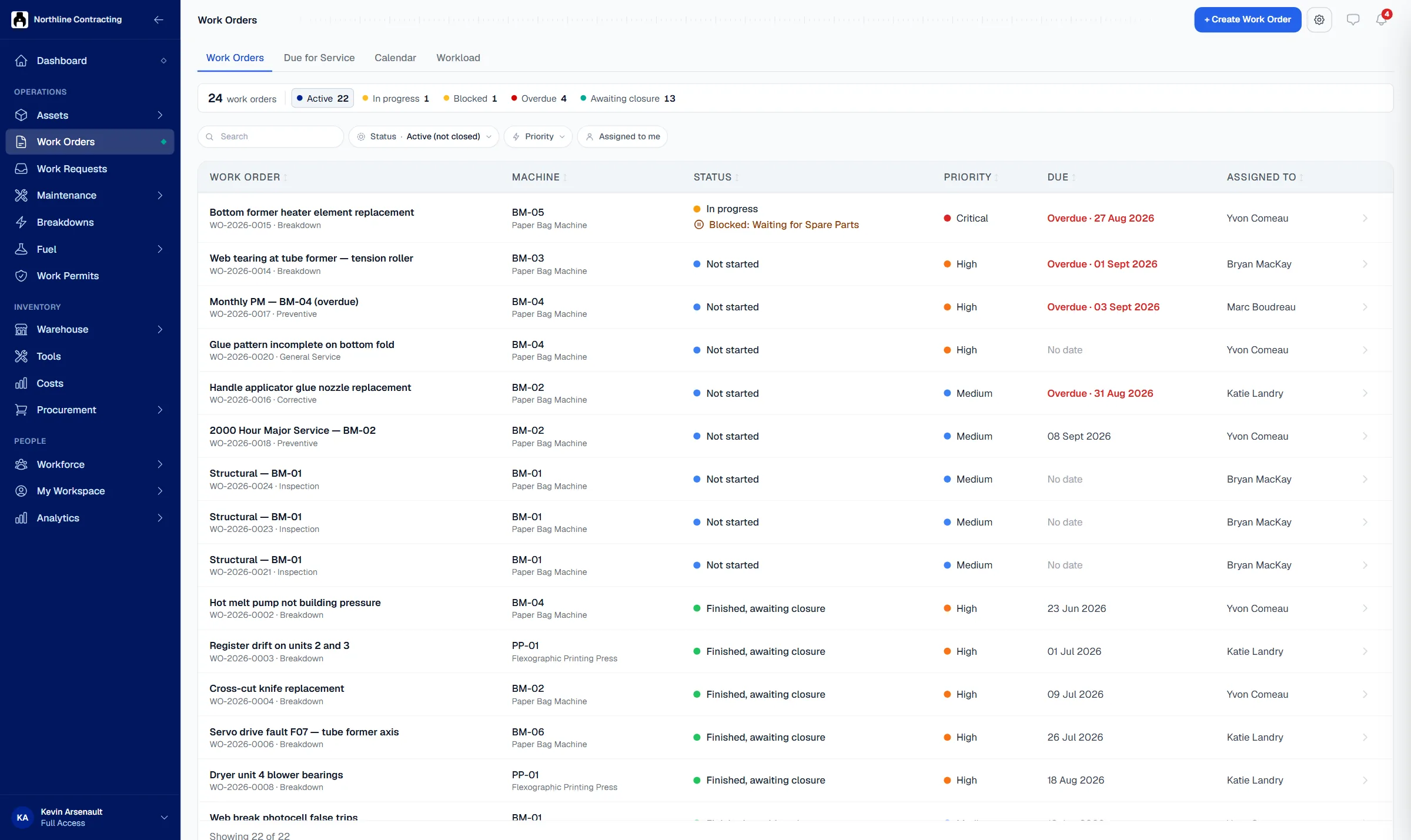
A work order in Solmex is a six-stage resolution record — reported, diagnosed, parts, repair, testing, closed — with every step stamped, every comment kept, every part traced.
Work orders
Work orders open themselves from breakdowns, overdue services, and failed inspections — one queue for everything that needs a wrench. The timeline shows exactly where each repair stands and what it's waiting on.
Each work order carries a job card — the workshop's step list, signed off one task at a time. A work order isn't “done” because someone says so; it's done when the card is.
Drop a critical breakdown into the week and lower-priority work cascades down the schedule automatically. Planners adjust exceptions, not the whole board.
Comments, photos, part issues, status changes — one collaboration stream per work order, on web and mobile. Three years later, the whole repair still reads like a logbook.
A work request is somebody outside maintenance saying a machine needs attention, before anyone has accepted the work. A work order is maintenance having accepted it: assigned, scheduled and tracked to completion. Requests are triaged into work orders or breakdowns, or closed with a reason the requester can read.
Yes. Job cards are executed in the field on the mobile app, task by task, with photos and comments attached as the work happens. The card is what closes the work order: a job is not done because somebody says so, it is done when the card is.
They can. An overdue service, a reported breakdown, a failed inspection finding and a triaged work request all raise work orders, and each one records where it came from, so a report can always tell a requested job from one maintenance raised itself.
Whoever your site says. The sign-off roles on a job card are a list you configure: rename them, add your own, and mark which ones must sign before the job can be completed. A role you withdraw stops being required but still names what was signed under it.
Follow a real breakdown from field report to sign-off — timeline, job card, parts and all — in a 30-minute walkthrough.
NO COMMITMENT · YOUR DATA STAYS YOURS